

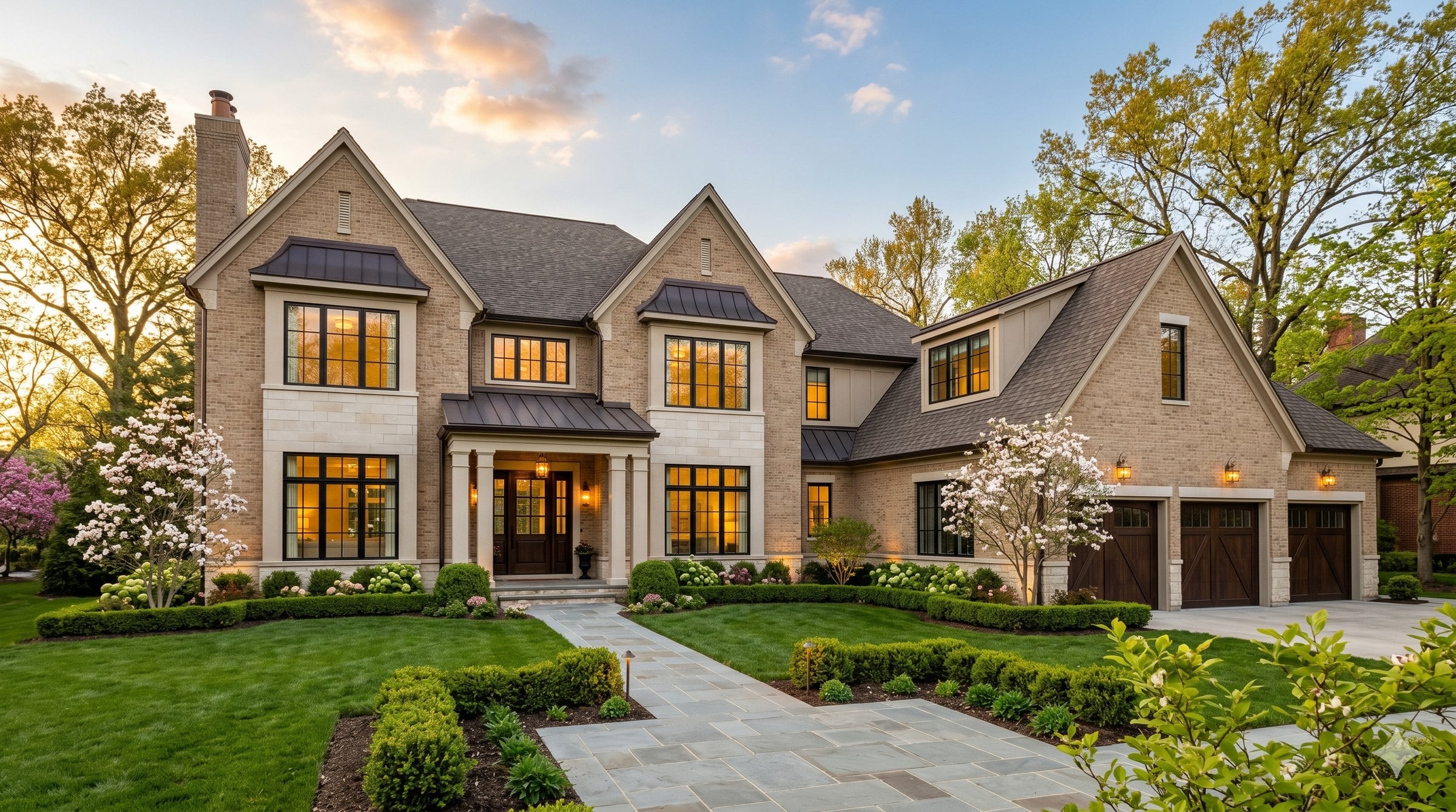
Monthly Replacement Cost Pressure Index (RCPI) update covering $1M+ residential closes in Marion, Hamilton, and Boone Counties. Data: 190 closed sales from January 1 through April 30, 2026.
By Kris Bashenow, CLHMS | The DeBoor Group, Real Broker LLC | indyrealestateinsider.com
Where the market actually was in April
April was the busiest, fastest, and most competitive month I have seen in Indianapolis luxury so far this year, and the MIBOR data backs it up across every dimension I track.
74 homes priced at $1M and above closed in the tri-county area in April. 48 of them, almost two-thirds, went under contract within seven days of listing. The median sale closed at 99.35% of list price, in four days. 17 of those 74 closes finished above asking, which is more over-list deals in a single month than January, February, and March combined.
And almost every one of those bidding wars happened in Carmel.
If you have been watching homes pop and go pending in your neighborhood and wondering whether it is really moving as fast as it looks, the answer is yes, and the data shows where, why, and who is winning.
The 7-Day Rule, and why it matters
When I look at the full 190 luxury closes from January through April, the single cleanest pattern in the data is what I’ve been calling the 7-Day Rule. The way it works is simple: a luxury home in this market either gets it right in the first week and clears at or above list, or it falls onto a slow track where the math turns against the seller fast.
Here is how all 190 sales broke down by days on market this year:
| Time on Market | Number of Sales | Median Close vs. List | Sold Over List |
|---|---|---|---|
| 0 to 7 days | 100 | 100.00% | 31.0% |
| 8 to 30 days | 24 | 95.96% | 8.3% |
| 31 to 90 days | 31 | 94.78% | 0.0% |
| 91 to 180 days | 27 | 93.29% | 0.0% |
| 180+ days | 8 | 97.78% | 0.0% |
That cliff at day seven is dramatic. Homes that go under contract in the first week sell at full ask on average and frequently above it. Homes that linger past week one never see a bidding war, period, and the price erosion accelerates from there.
April pushed this pattern further than any prior month of 2026. The fast-clearance rate jumped from 48.8% in March to 64.9% in April, a 16-point swing in a single month. That is not a seasonal blip. That is buyers becoming more decisive and sellers pricing more honestly out of the gate.
Two flavors of fast: new construction and resale behave completely differently
Here is something I think most buyers do not realize: even though new construction and resale both cleared in seven days or less at similar rates this year, the way they did it was not the same at all.
When a luxury new construction sells fast, 86% of the time it closes at exactly list price. The builder set the number, a qualified buyer in the pipeline took it, no negotiation needed. Almost no bidding wars. Only 5% of fast new construction sales went over ask.
When a luxury resale sells fast, 38% of the time it closes over list. Multiple offers. Real competition. Buyers competing on price, on terms, sometimes on appraisal contingencies. Only 30% closed exactly at list.
Both produce sub-7-day DOM numbers. But if you are writing an offer, you need to know which flavor you are walking into. New construction is a take-it-or-leave-it conversation with a builder. Resale on a sharp listing is a competition you have to win.
| Behavior | New Construction Fast Sales | Resale Fast Sales |
|---|---|---|
| Median close vs. list | 100.00% | 100.00% |
| Sold OVER list | 5% | 38% |
| Sold AT list | 86% | 30% |
| Sold UNDER list | 9% | 32% |
The April 2026 RCPI by Price Tier
The Replacement Cost Pressure Index (RCPI) is the metric I publish every month to give buyers and sellers a real per-square-foot read on whether they are paying a premium for new construction versus what comparable resale is clearing. RCPI of 1.00 means new and resale are at parity per foot. Above 1.00 means new costs more. Below means resale is outpacing new.
Here is where April landed for the rolling Jan-Apr period:
| Price Tier | New Construction $/sf | Resale $/sf | RCPI | New Premium |
|---|---|---|---|---|
| $1.0M to $1.5M | $342.49 | $326.81 | 1.048 | +4.8% |
| $1.5M to $2.5M | $470.60 | $403.55 | 1.166 | +16.6% |
| $2.5M and above | $534.20 | $437.25 | 1.153 | +15.3% |
| Overall | $371.06 | $357.24 | 1.022 | +2.2% |
The pattern is the part that should jump out. At the entry luxury level, new and resale are clearing at nearly the same per-foot price. There is barely a premium for building new at that band. But as you move up tier by tier, the gap widens fast. By $1.5M to $2.5M, new construction costs you 16% more per foot. On a 4,000 SF home that is roughly $250,000 in additional cost.
April pushed those tier premiums even further:
| Price Tier | April RCPI | April Premium |
|---|---|---|
| $1.0M to $1.5M | 1.069 | +6.9% |
| $1.5M to $2.5M | 1.525 | +52.5% |
| $2.5M and above | 2.149 | +114.9% |
| April Overall | 1.023 | +2.3% |
The April $2.5M+ figure is on a small number of comps (one new construction sale against two resale sales), so I would read that one as directional, not statistical. But the magnitude is striking: at the very top of the market in April, the new construction sale came in at $901.51 per foot while the resale comps cleared at $419.44. New construction at the trophy level costs more than double per foot what resale costs right now.
The month-over-month picture shows how this has trended:
| Month | RCPI Overall | $1.0-1.5M | $1.5-2.5M | $2.5M+ |
|---|---|---|---|---|
| Jan | 1.108 | 1.165 | 1.195 | n/a |
| Feb | 1.176 | 1.101 | n/a | 1.121 |
| Mar | 0.971 | 1.115 | 1.005 | 0.815 |
| Apr | 1.023 | 1.069 | 1.525 | 2.149 |
March was the one month all year where overall RCPI dipped below 1.00, mostly driven by a cluster of competitively priced new builds at the entry tier paired with a few high-per-foot resales at the top. April snapped the upper tiers back to substantial premiums while the entry tier stayed near par.
Where the bidding wars are happening: Carmel
If you want to know where Indianapolis luxury demand is actually concentrating in 2026, follow the over-list closes. Out of 33 over-asking sales from January through April:
| Period | Total Over-List | Carmel (2910) | Carmel Share |
|---|---|---|---|
| January | 6 | 3 | 50.0% |
| February | 4 | 2 | 50.0% |
| March | 6 | 4 | 66.7% |
| April | 17 | 13 | 76.5% |
Carmel has increased its share of bidding wars every single month of 2026. In April, more than three out of every four over-list closes in the entire tri-county area happened in MIBOR area 2910.
For comparison: Westfield (area 2913), which had 39 total sales over the same four months and most of the active builder inventory in Chatham Hills, produced exactly one over-list close all year. Westfield is the absorption zone, where new construction inventory clears at list. Carmel is the bidding zone, where resale clears above it. Two completely different markets, ten miles apart.
If you are listing in Carmel between $1.5M and $2.5M, plan for multiple offers and price the home accurately on launch day. If you are listing in Westfield in a builder community, the dynamic is qualified-buyer queue absorption against a builder-set price, not bidding.
What this means for buyers and sellers right now
Buyers in Carmel between $1.5M and $2.5M: You are walking into the hottest band of the market. Median DOM for over-list April sales was 3 days. Have your financing tightened up, your inspection terms drafted, and your decision-makers on the same page before you tour. The home you saw this morning may already have multiple offers stacked by tonight.
Buyers in Westfield or other builder-heavy zones: Different game. The builder sets the number and a qualified-buyer queue absorbs at list. Negotiating room is minimal. Your edge is timing the next phase release or finding a spec where the builder needs to move inventory before quarter end.
Buyers comparing new construction to resale above $2.5M: The replacement cost premium has held above 15% all year and crossed 100% per foot in April. On a 5,000 SF home, that is about $485,000 in additional cost for buying new versus a comparable resale. That margin justifies looking seriously at resale even if you have always preferred new.
Sellers in any segment: Internalize the 7-Day Rule. If your home is priced right, you sell in a week at full ask, often above. If you do not move in week one, you are already on the slow track and the math erodes from there. Get inspections done before listing. Get photography and marketing tight before launch day. A soft launch costs you real money in this market.
Key Takeaways from April
April was structural, not seasonal. The 16-point jump in fast-clearance rate is too large for spring effect alone. Velocity and price competition both rose at the same time, which is what real demand acceleration looks like.
Carmel keeps tightening. Carmel’s share of over-list closes has climbed every month this year, from 50% in January to 76.5% in April. The Indianapolis luxury demand magnet is getting stronger and more geographically concentrated, not more diffuse.
The two-flavor pattern is real. New construction clears at list. Resale clears in bidding wars. Both move fast, but for opposite reasons and with completely different negotiation dynamics. Knowing which one you are looking at is the single most useful piece of buyer or seller intelligence in this market.
Methodology
Source data: MIBOR Broker Listing Cooperative residential sales, $1M and above close price, single-family residential, in Marion (all townships), Hamilton, and Boone Counties. Reporting period: closes between January 1, 2026 and April 30, 2026. Total dataset: 190 closed sales.
RCPI calculation: Median list-price-per-square-foot (Main and Upper levels only, per MIBOR standard) of new construction sales within a price tier, divided by the same statistic for resale sales in the same tier and period.
7-Day Rule: Proportion of closed sales with cumulative days on market less than or equal to 7, paired with the median ratio of close price to final list price for that cohort.
Frequently Asked Questions
What is the Replacement Cost Pressure Index (RCPI)?
The RCPI is a proprietary monthly metric published by Kris Bashenow that measures the per-square-foot price ratio between new construction and resale luxury homes in Marion, Hamilton, and Boone Counties. The April 2026 tri-county RCPI overall is 1.022, with tier-specific values ranging from 1.069 at $1.0M to $1.5M to 2.149 at $2.5M and above.
What is the 7-Day Rule in Indianapolis luxury real estate?
The 7-Day Rule is a framework developed from MIBOR data showing that 52.6% of all $1M+ Indianapolis luxury closes from January through April 2026 went under contract within seven days of listing, with a median close at exactly 100% of list price. Homes that do not go under contract in the first week enter a slow-track regime where close-to-list ratios fall to 93-96% and bidding wars effectively stop happening.
Which Indianapolis luxury submarket produces the most bidding wars in 2026?
Carmel (MIBOR area 2910) produced 22 of 33 over-list sales in the tri-county $1M+ market from January through April 2026, including 13 of 17 over-list sales in April alone, for a 76.5% concentration. Carmel is the dominant bidding-war zone in Indianapolis luxury.
At what price tier is the new-construction premium highest?
The $2.5M+ tier produces the highest RCPI premium. April 2026 RCPI at this tier was 2.149, meaning new construction commanded more than double the per-square-foot pricing of resale comps. The rolling Jan-Apr 2026 RCPI at this tier is 1.153, or a 15.3% premium.
Why did the overall RCPI premium drop from January to March 2026?
March produced an unusual cluster of competitively priced new construction sales at the entry luxury tier while resale sales in March skewed toward the higher tiers and trophy properties. This temporarily compressed the per-foot premium of new construction. April reversed the trend at the upper tiers.
Kris Bashenow is a Certified Luxury Home Marketing Specialist (CLHMS) and luxury real estate advisor at The DeBoor Group powered by Real Broker LLC, serving Marion, Hamilton, and Boone Counties. The Replacement Cost Pressure Index is a proprietary monthly metric published at indyrealestateinsider.com. For data inquiries, methodology questions, buyer representation, or seller representation in the Indianapolis luxury market, contact Kris directly.